Weaving Performance
This thesis investigates how weaving, a domestic textile practice, can be transformed into a live, costumed performance that holds and reshapes experiences of bipolar emotional sensitivity. Rather than treating emotion as purely internal, the project understands feeling as something that moves between bodies, materials, and environments. It asks how a loom, a squid-yokai costume, and my performing body can make states of overwhelm, exhaustion, and relief visible in everyday spaces, and reframe emotional intensity as a form of knowledge. Using a practice-based, autoethnographic methodology, I conducted a series of 30- to 60-minute weaving sessions in private, semi-private, and public locations in Toronto and Hangzhou. In each session, I wore a white washi-paper costume inspired by the bigfin squid and Japanese yokai, with two long, expandable tentacles that exaggerated a sense of stretched, fragile reach. The loom was set up so that one continuous length of cloth recorded changes in density and structure over time. Each performance was documented through video, photographs, field notes, still images of the textile, and reflective writing. The project identifies how bipolar rhythms shape material decisions at the loom, how costume and movement externalize inner states without reducing them to symptoms, and how site changes the risks and possibilities of being visibly “not okay” in public. The outcomes show cloth and costume as emotional archives that carry traces of contact, weather, and mood, while offering alternatives to strictly medical or productivity-based views of mental health. This thesis contributes to craft studies, performance, and mental health discourse by proposing weaving as a relational, mobile space for thinking with emotional sensitivity. It suggests that slow, fragile, and repetitive practices can hold complex states in ways that invite curiosity, care, and shared reflection.
Weaving Performance I, 2026, Single-channel video, looped, with audio.
Full length: 44:08
This video documents the first performance in the Weaving Performance series, recorded on January 30, 2026, in the Design Photo Studio at OCAD University. As an experimental starting point for the larger project, this performance tested the relationship between body, loom, costume, and woven material within a controlled indoor setting. It also established the structure of the series, which moved from indoor to outdoor sites and from private spaces toward increasingly public ones. The work marked the beginning of weaving as a durational, site-responsive performance practice.
Weaving Performance II, 2026, Single-channel video, looped, with audio.
Full length: 38:43
This video combines two performances from the Weaving Performance series, recorded in the Great Hall at OCAD University on January 30, 2026, and on a home balcony on February 1, 2026. While both performances remained connected to interior space, they introduced different degrees of visibility and exposure. The Great Hall situated the weaving body within an indoor public environment, while the balcony performance shifted the work into a semi-private, semi-outdoor setting. Together, they trace a gradual movement from protected space toward greater openness, testing how weaving changes across different conditions of attention, contact, and environment.
Weaving Performance III, 2026, Single-channel video, looped, with audio.
Full length: 16:35
This video documents the final Toronto performance in the Weaving Performance series, recorded at St. Andrew’s Playground on February 4, 2026. As the only fully outdoor performance in the Toronto sequence, the work brought weaving into direct contact with winter conditions, including freezing weather, exposure, and the unpredictability of a public park. Positioned at the furthest point in the series’ movement from indoor to outdoor and from private to public, this performance tested how bodily endurance, material fragility, and emotional visibility shifted under the pressure of the cold environment.
Weaving Performance IV, 2026, Single-channel video, looped, with audio.
Full length: 49:27
This video combines two performances from the Weaving Performance series, recorded in a home living room on February 28, 2026, and on a home balcony on March 2, 2026, in Hangzhou, China. Mirroring the second video in the Toronto sequence, these performances moved between an indoor domestic setting and a semi-outdoor residential space. Together, they extended the project’s comparative structure across geographic and cultural contexts, tracing how visibility, exposure, and emotional atmosphere shifted as the same weaving actions were repeated in a different home environment.
Weaving Performance V, 2026, Single-channel video, looped, with audio.
Full length: 19:02
This video documents the final performance in the Weaving Performance series, recorded in a community garden in Hangzhou, China, on March 3, 2026. As the outdoor conclusion to the Hangzhou sequence, the work placed weaving in direct relation to an open, shared environment shaped by weather, visibility, and public encounter. Echoing the final Toronto performance while remaining specific to its own site, this video extends the project’s comparative structure and considers how emotional sensitivity, bodily presence, and material fragility shift across different cultural and environmental contexts.
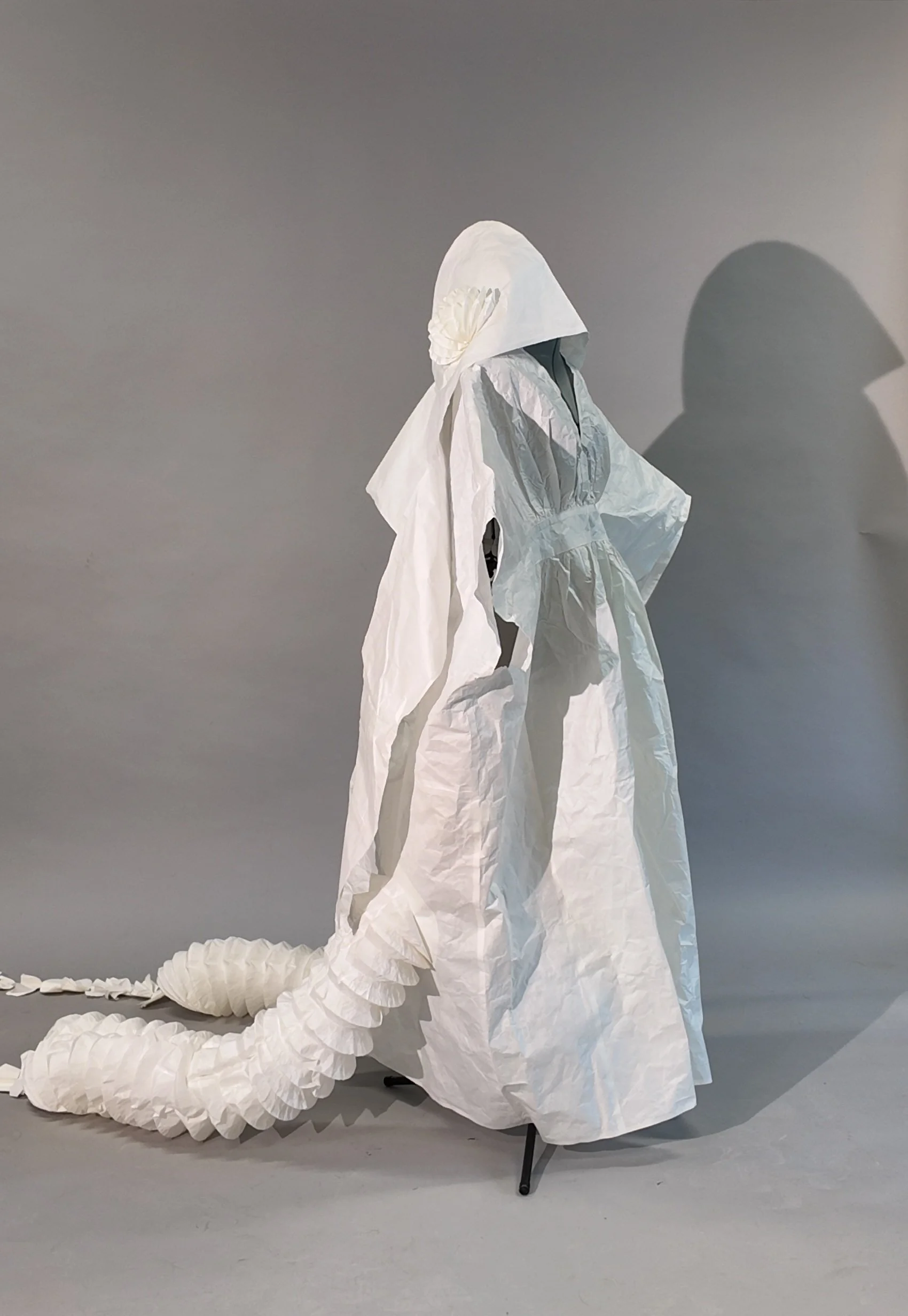
Final version of the squid-yokai costume in white washi paper, showing the straight robe-like silhouette, widened sleeves, and two extended pleated tentacles. Photograph by Yuting Zhou, 2026.
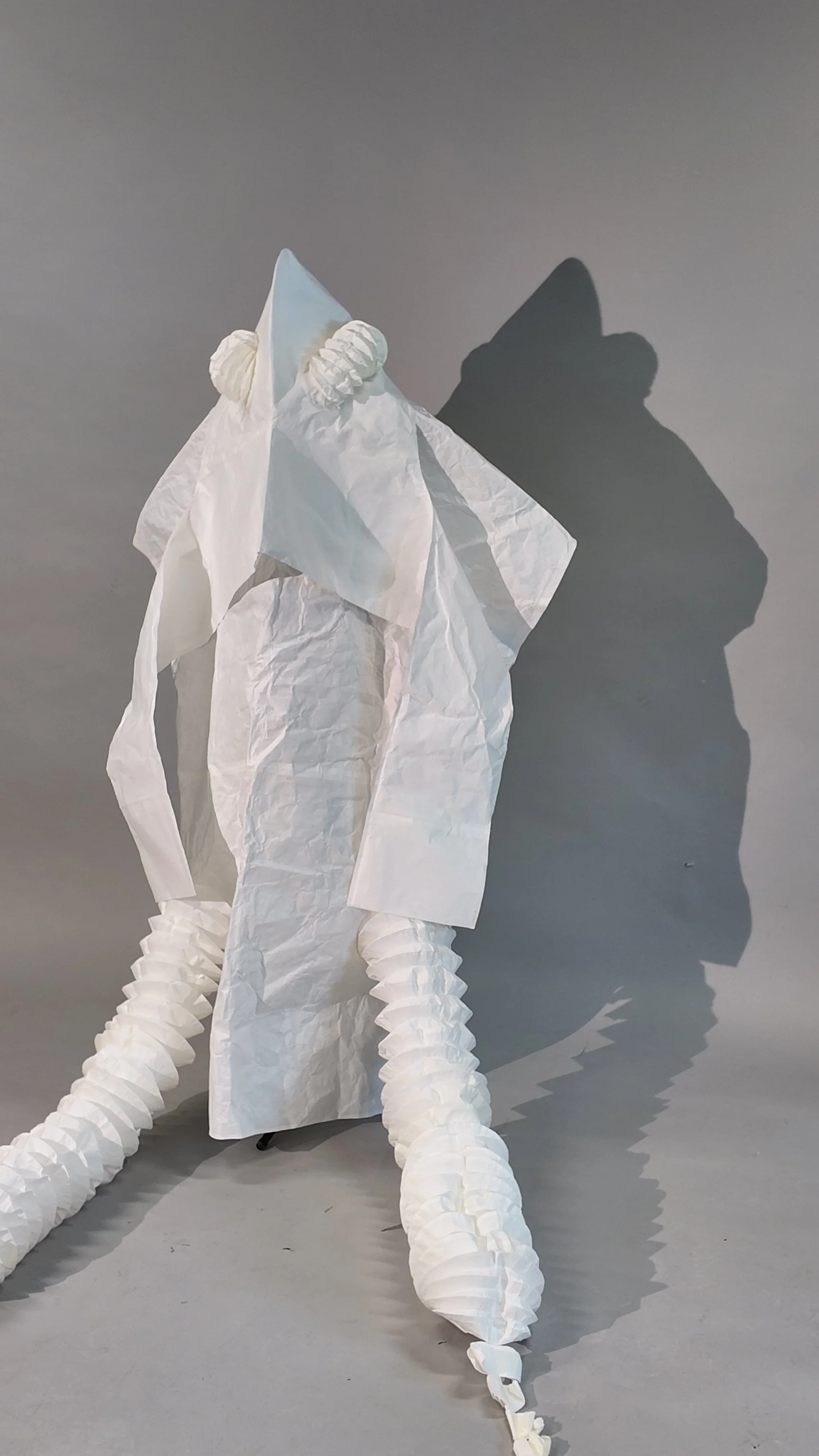
Back view of the final white washi paper squid-yokai costume, showing the two extended tentacles attached opposite each other along the back and the long trailing hood extensions. The cast shadow reinforces the squid-like silhouette. Photograph by Yuting Zhou, 2026.
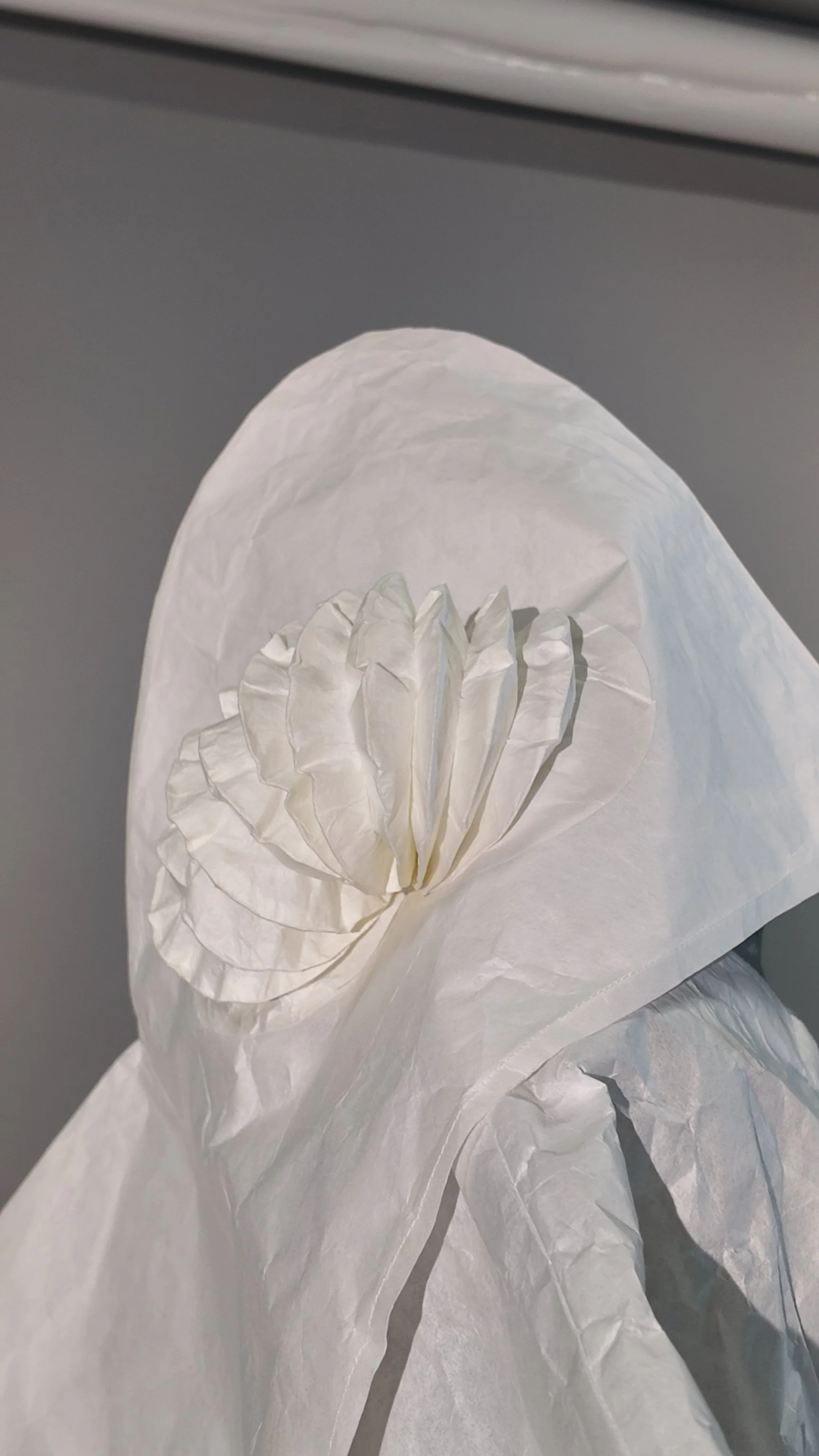
Detail of the hood and eye-like paper form in the final white washi paper squid-yokai costume, showing the repeated circular folded structure that unifies the head and tentacle elements. Adapted from Tomoko Nakamichi’s Pattern Magic 2 (2011, p. 49). Photograph by Yuting Zhou, 2026.
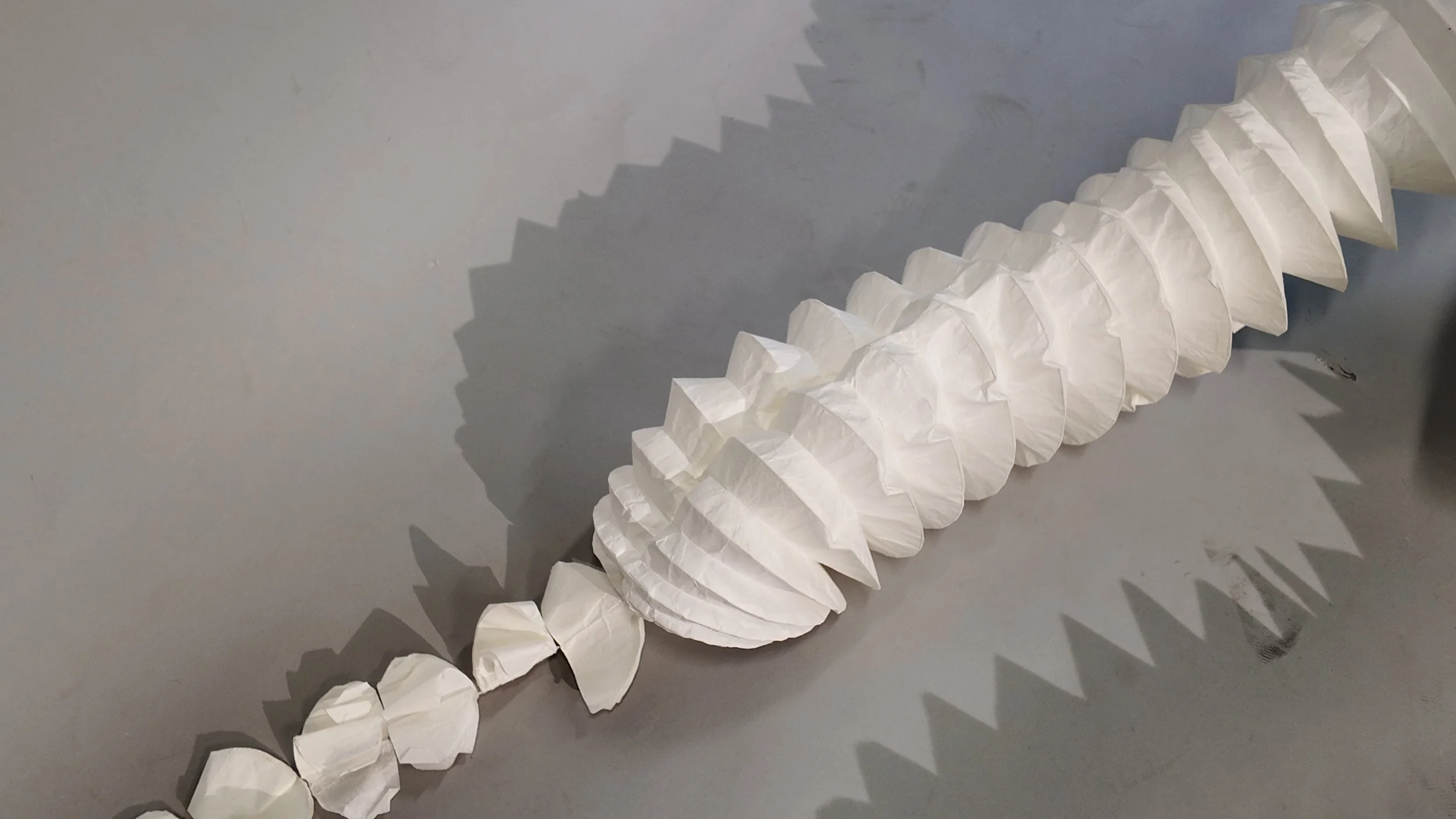
Detailed view of the opened tentacle structure in the final squid-yokai costume, showing the circular-sleeve construction in white washi paper that allows the form to expand, contract, and fold for transport. Adapted from Tomoko Nakamichi’s Pattern Magic 2 (2011, p. 49). Photograph by Yuting Zhou, 2026.
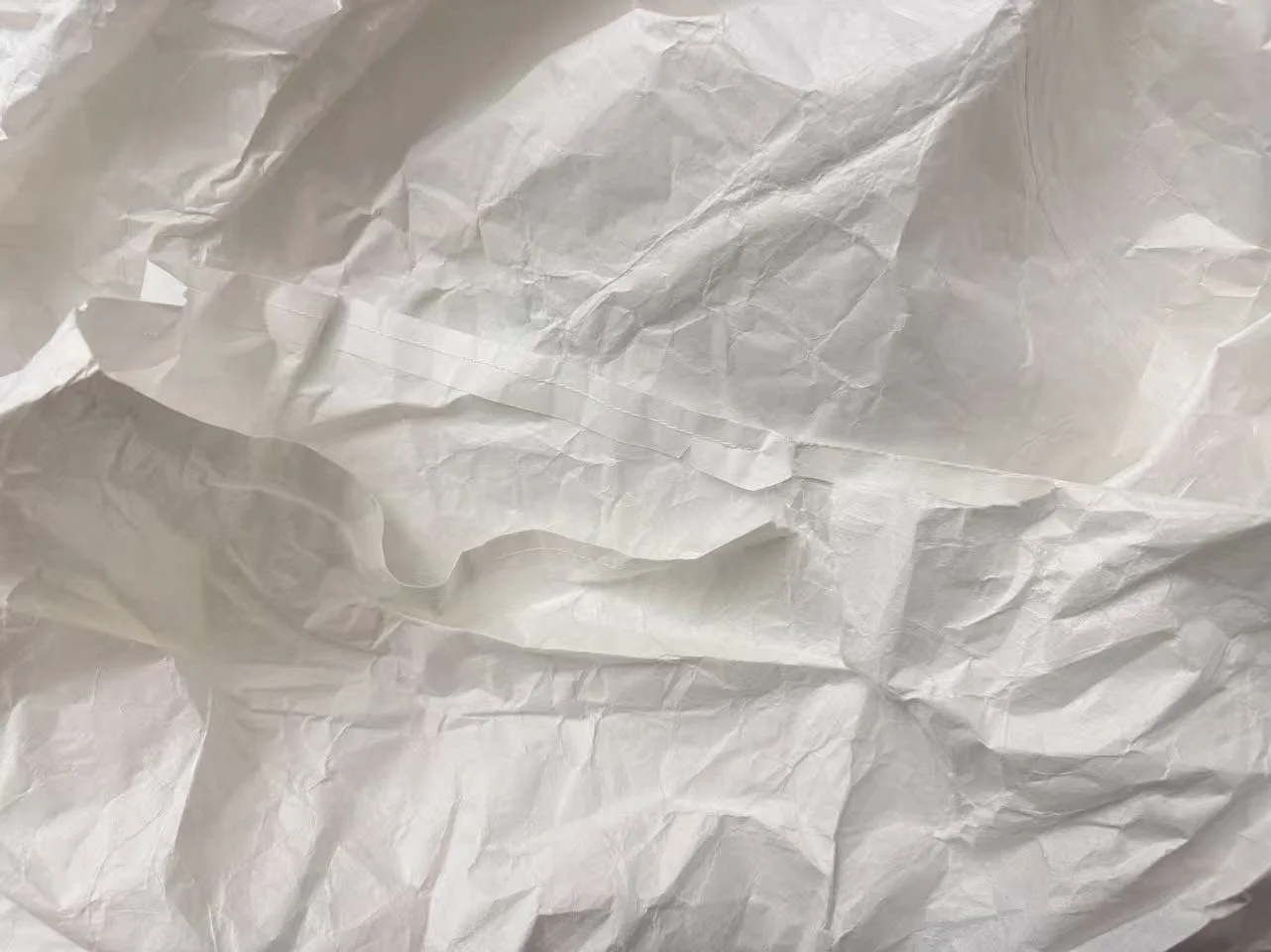
Tear at the armhole of the white washi paper costume after the first and second performances, showing structural damage caused by repeated movement and strain. Photograph by Yuting Zhou, 2026.
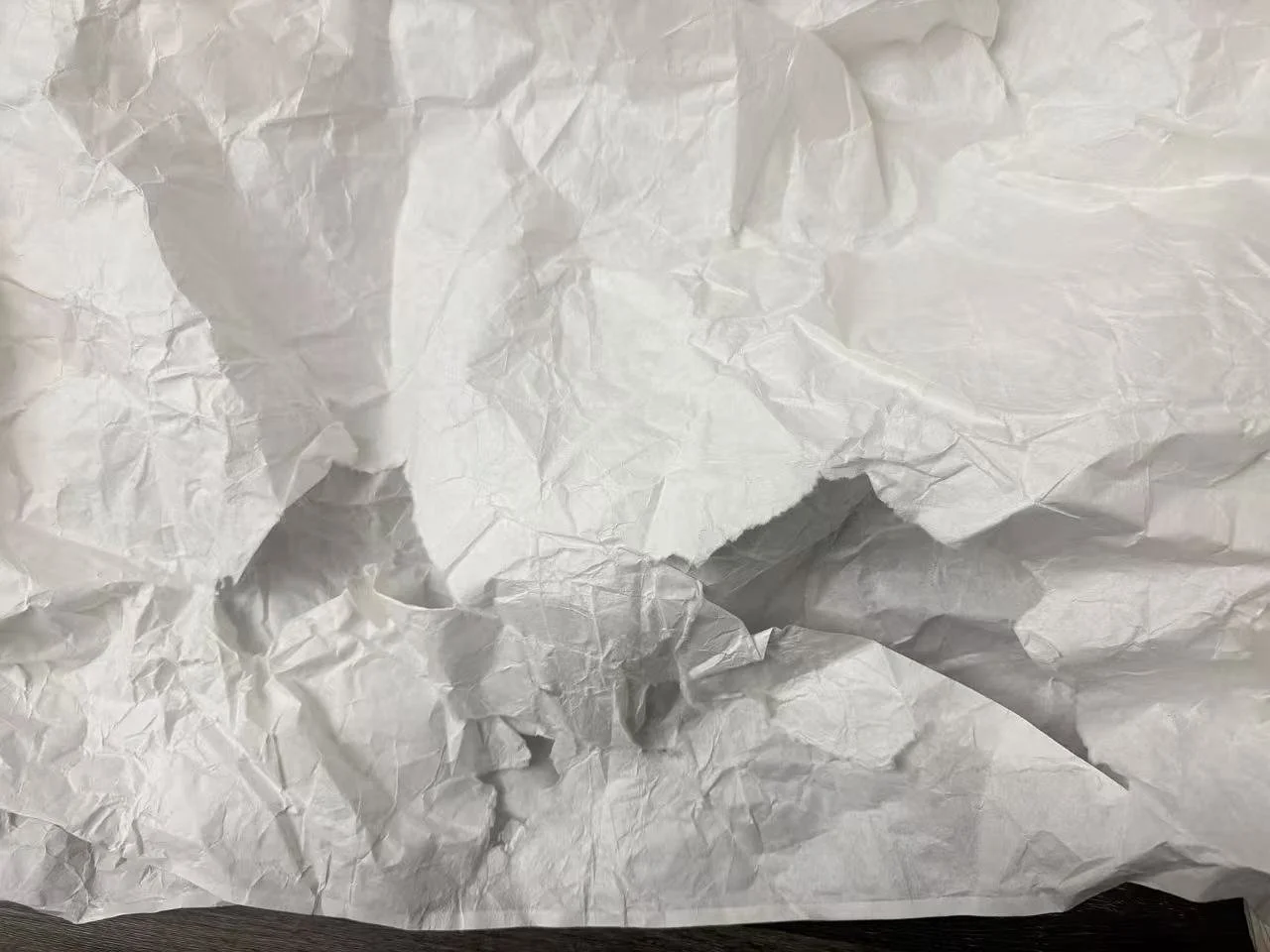
Torn lower hem of the white washi paper costume after the St. Andrew’s Playground performance, showing large ruptures caused when the paper adhered to snow and tore away during movement. Photograph by Yuting Zhou, 2026.
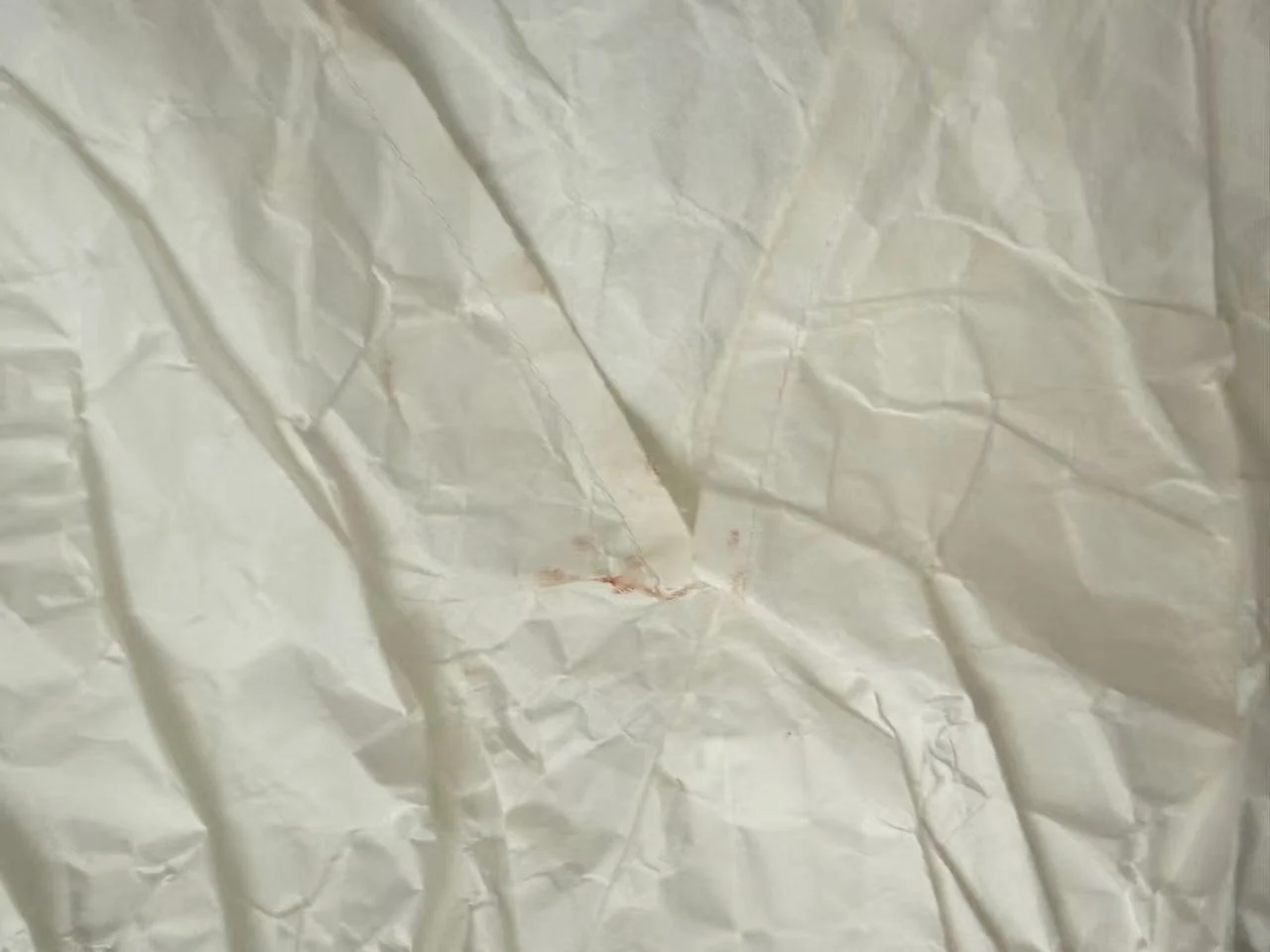
Lipstick stain on the V-shaped collar of the white washi paper costume after the Toronto balcony performance. Photograph by Yuting Zhou, 2026.
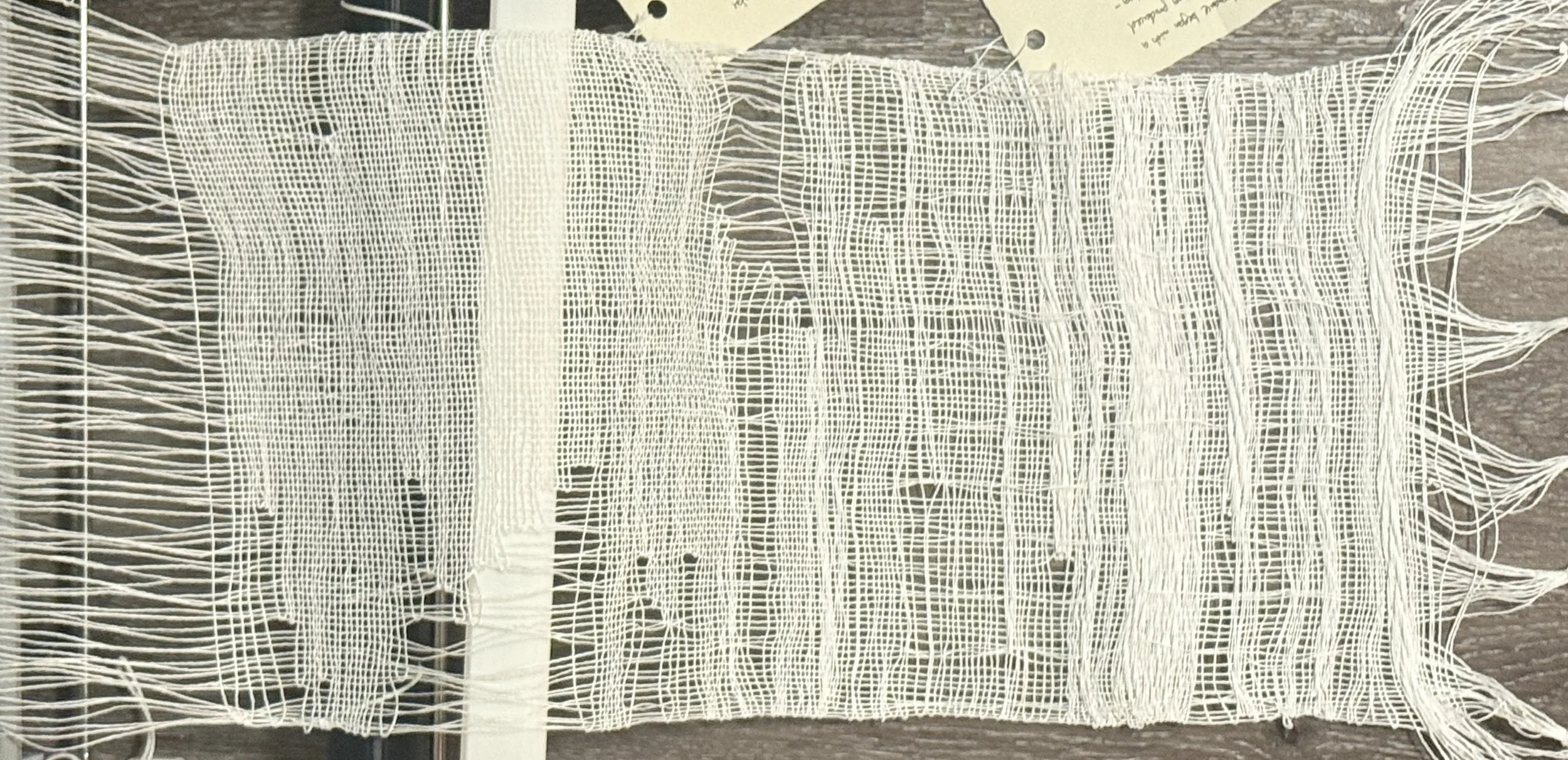
Composite view of all woven cloth from the Hangzhou performances, showing how denser fields, elongated passages, and interruptions varied across the Hangzhou sessions. Photograph by Yuting Zhou, 2026.
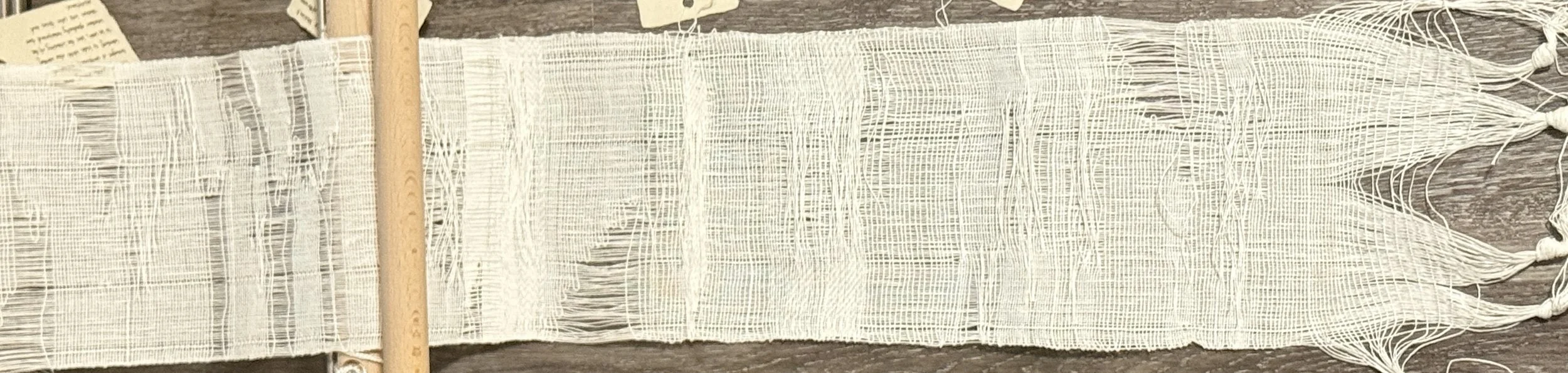
Composite view of all woven cloth from the Toronto performances, showing how density, open-work, and accidental gaps varied across the Toronto sessions. Photograph by Yuting Zhou, 2026.
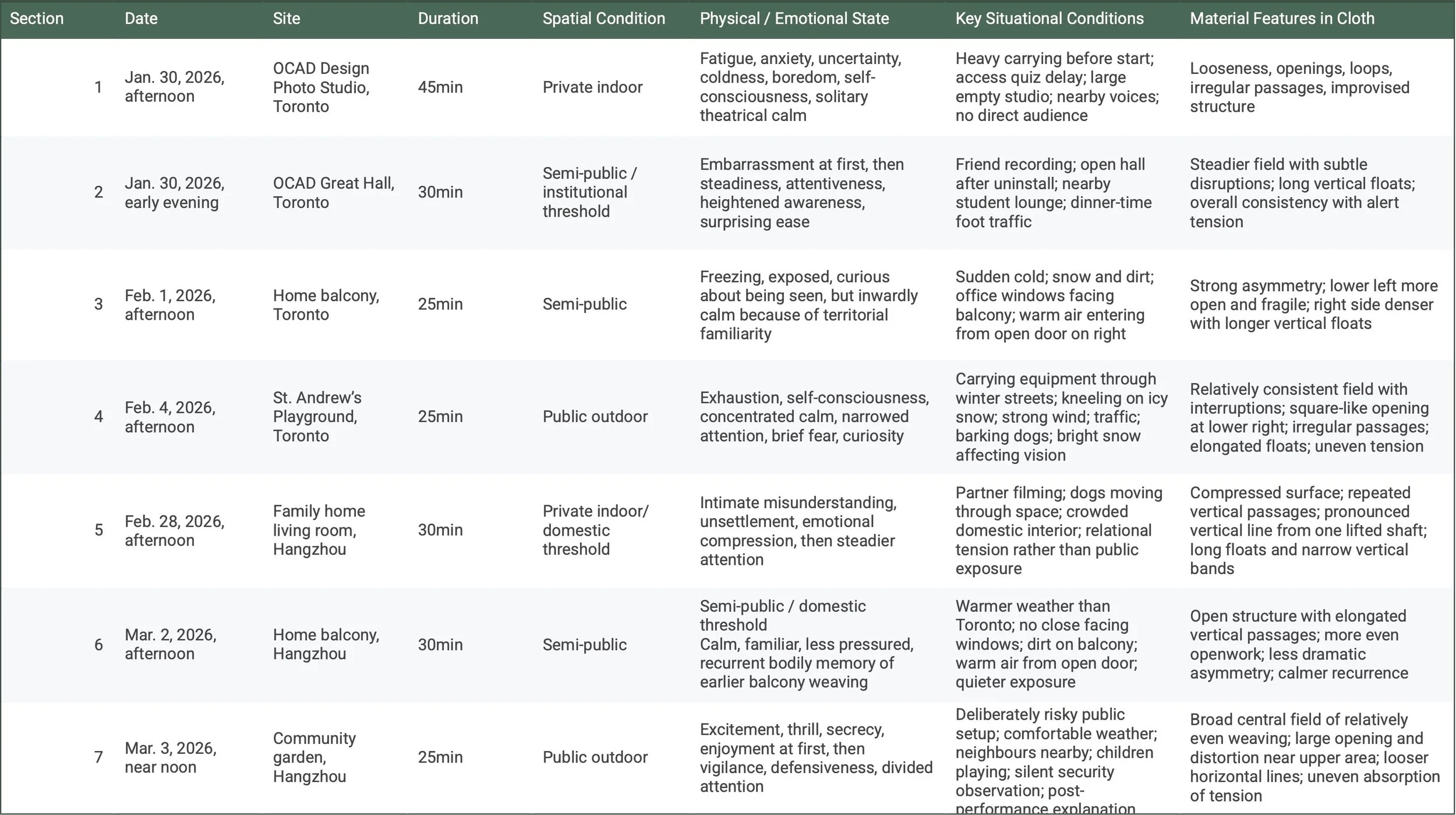
Session chart for the woven cloth archive, comparing the seven weaving performances across Toronto and Hangzhou by date, site, duration, spatial condition, physical and emotional state, situational context, and resulting material features of the woven washi cloth.
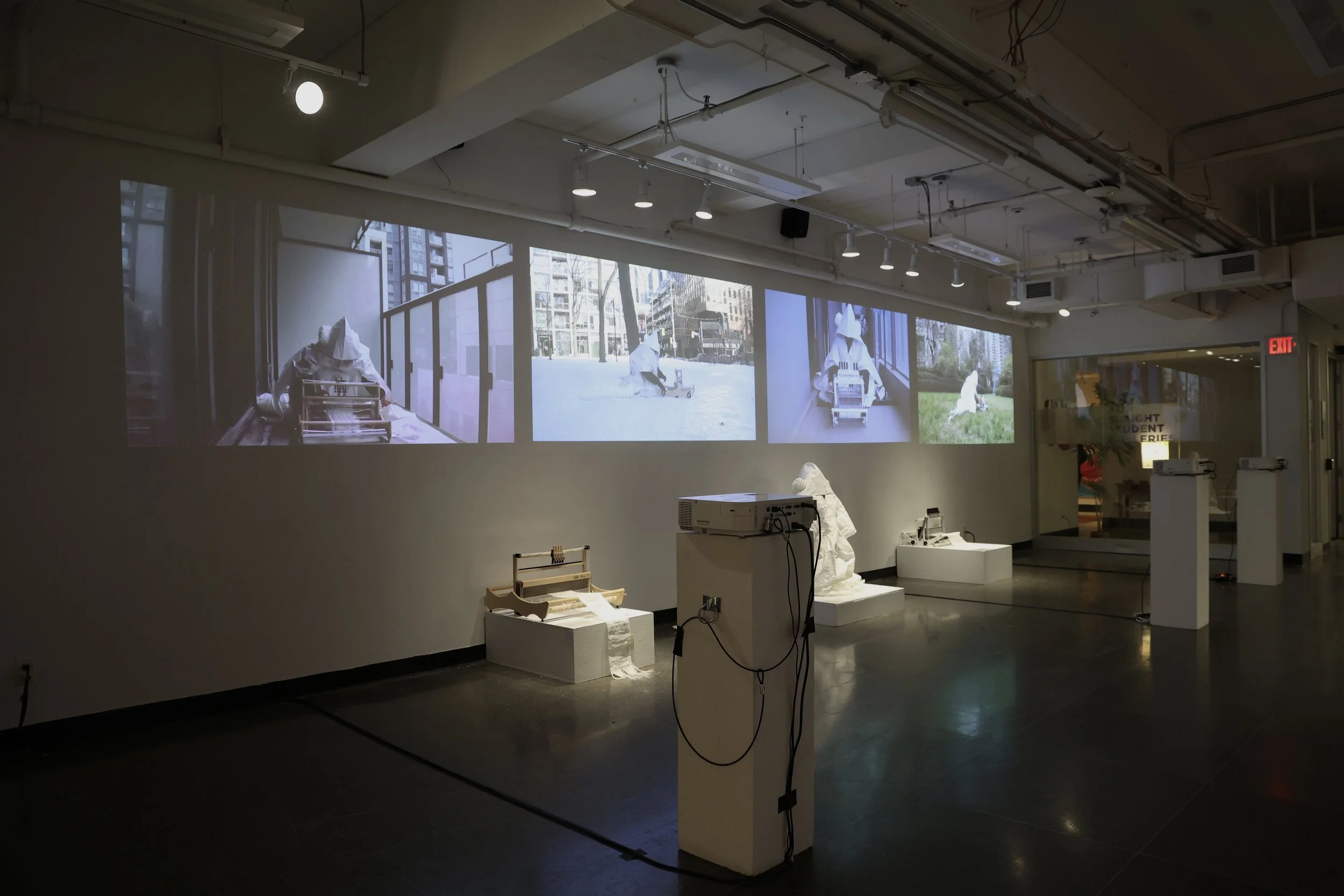
Installation view of the exhibition hallway, showing four projected performance videos displayed simultaneously alongside the loom, woven cloth, and costume. Photograph by Aritra Das, 2026.
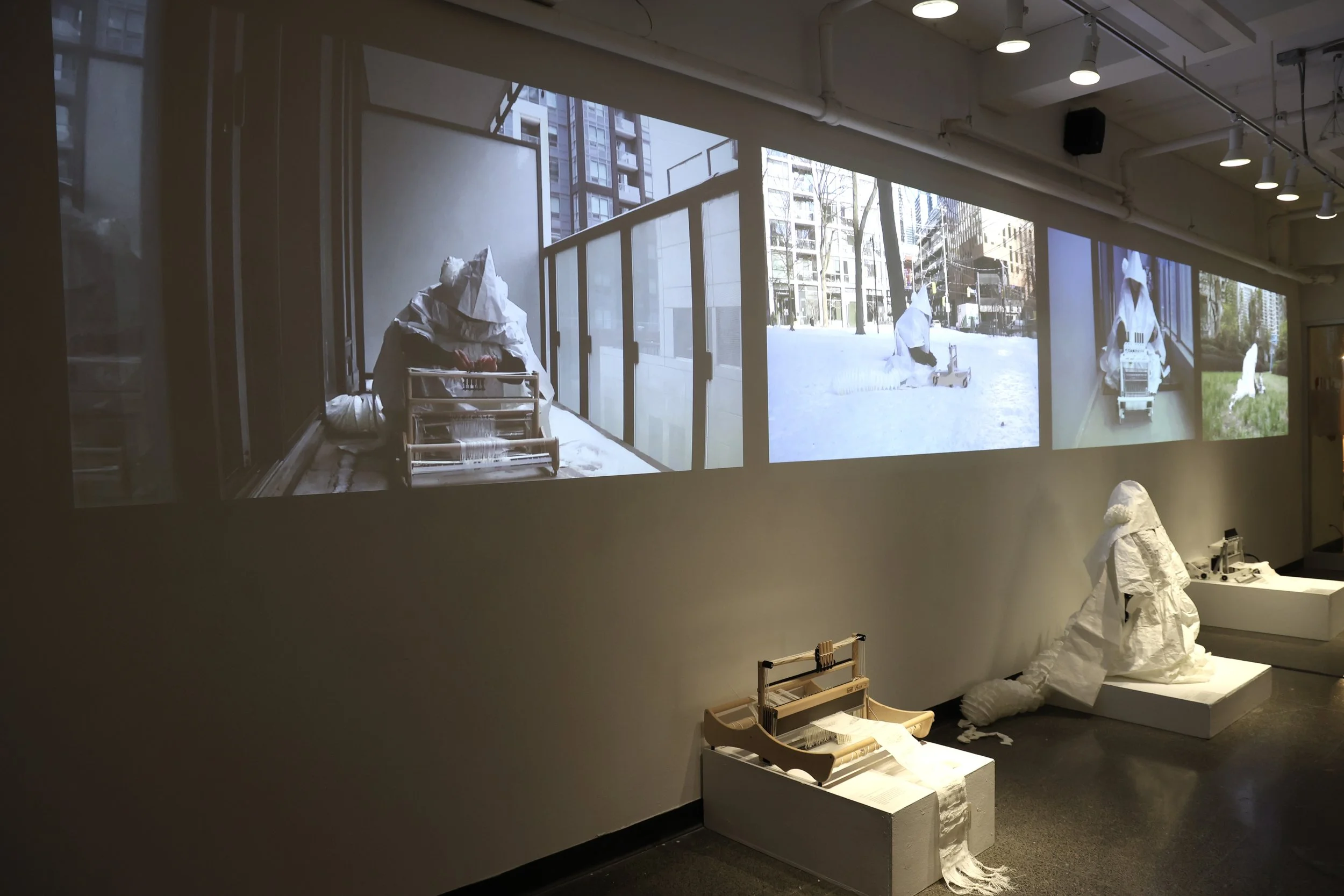
Installation view of the exhibition hallway, showing four projected performance videos displayed simultaneously alongside the loom, woven cloth, and costume. Photograph by Aritra Das, 2026.
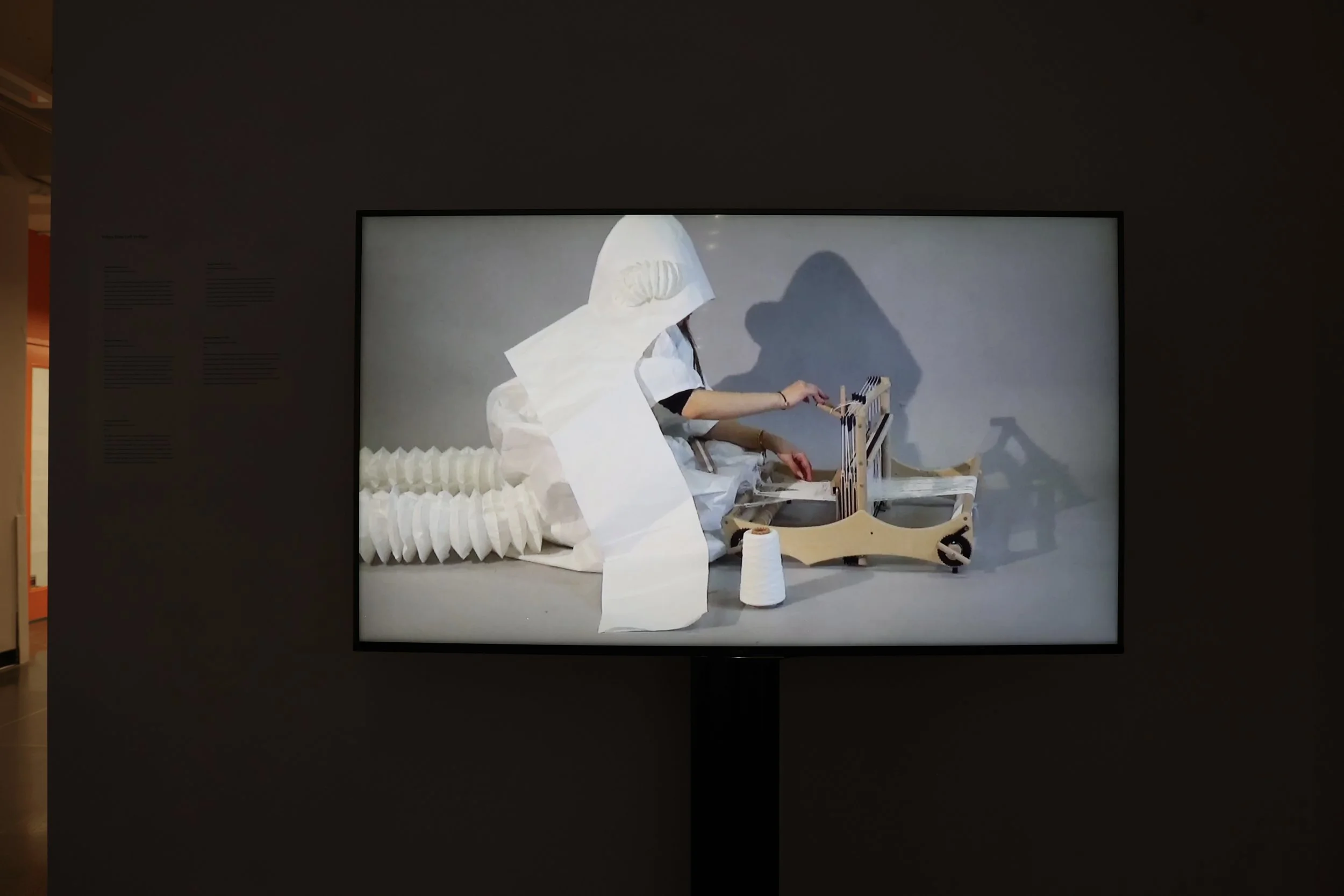
Installation view of the first studio performance shown on a monitor with a stand in the exhibition hallway. Photograph by Aritra Das, 2026.
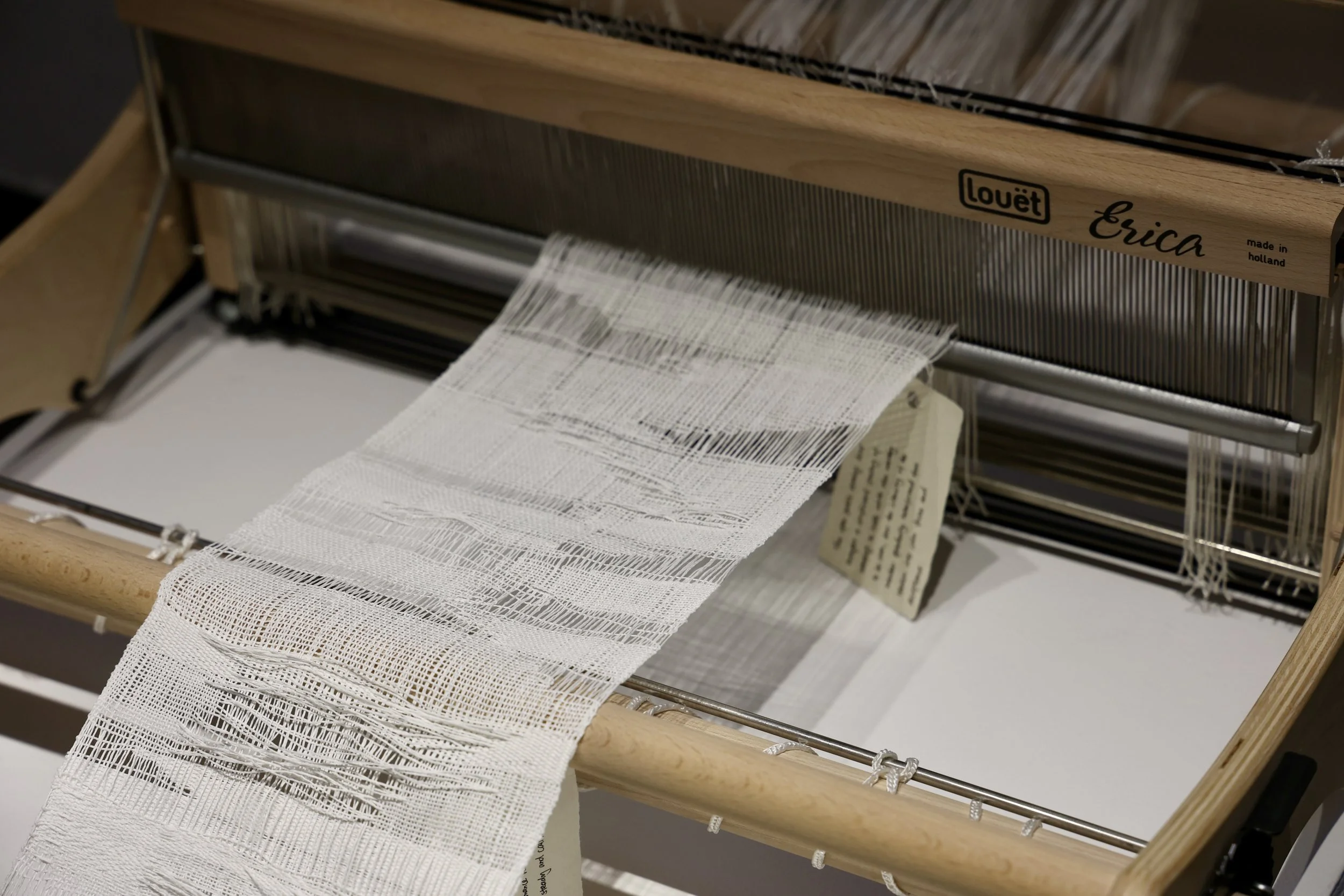
Detail of the labelled woven cloth on Loom 1. Photograph by Aritra Das, 2026.
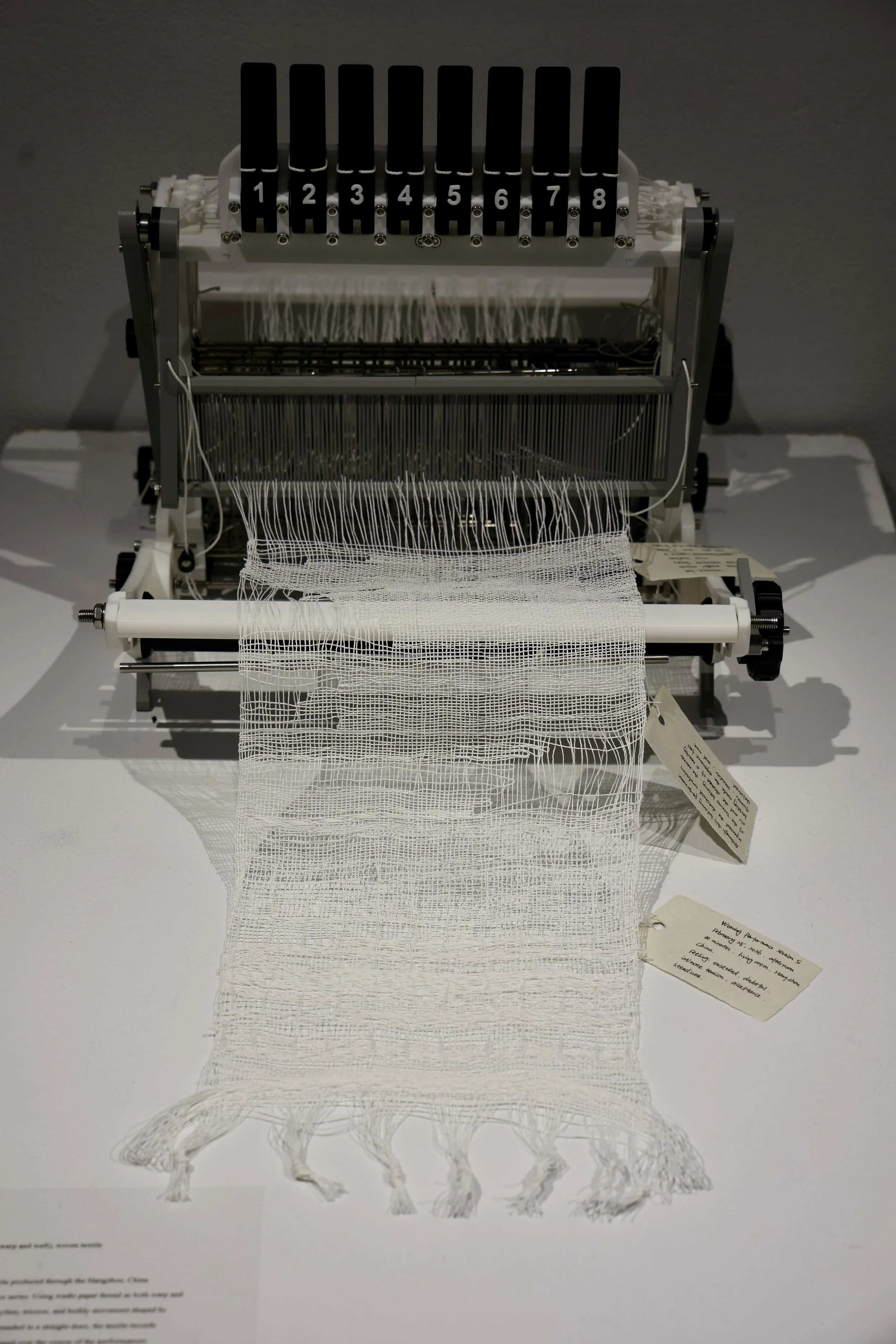
Detail of the labelled woven cloth on Loom 2. Photograph by Aritra Das, 2026.
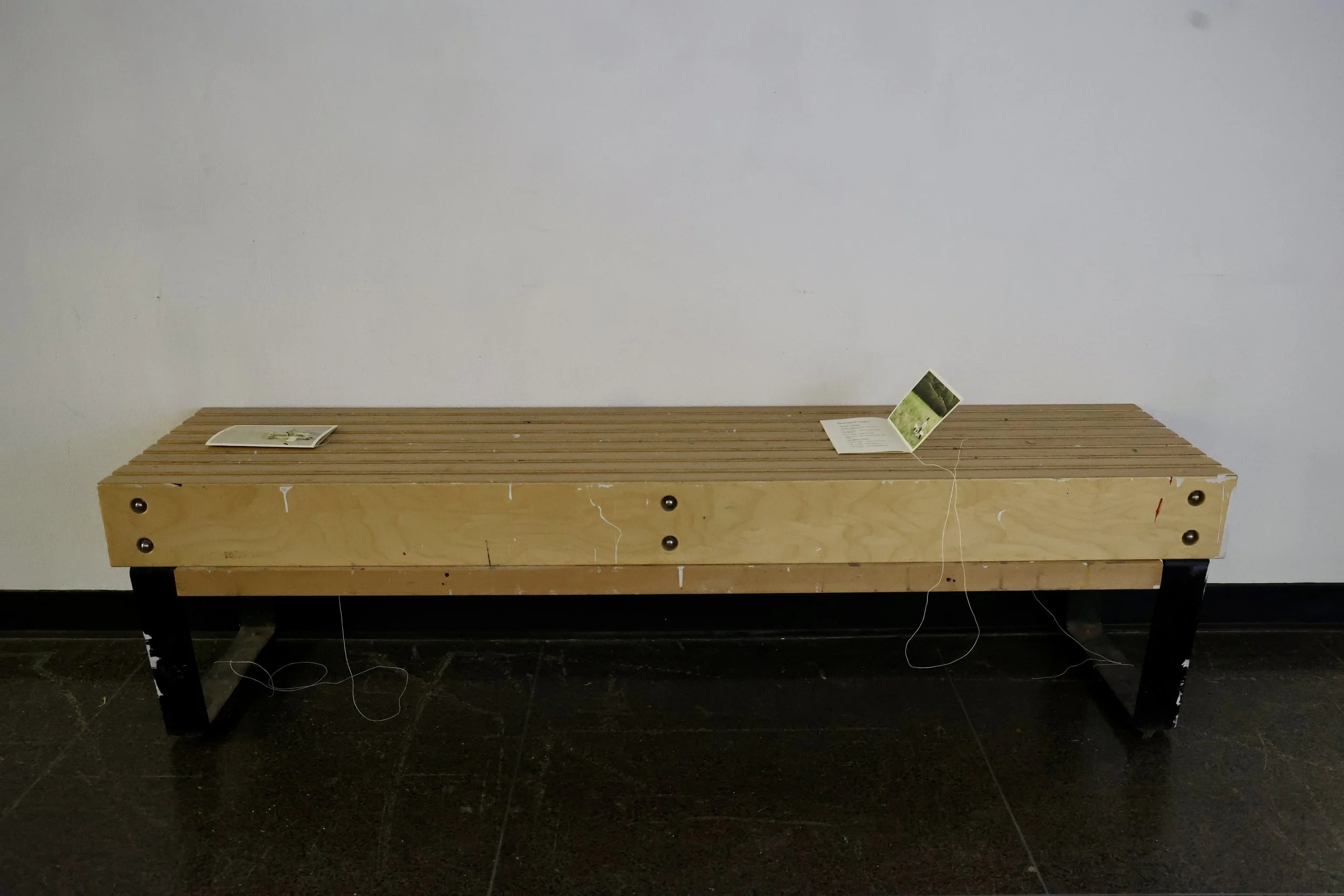
Installation view of the hallway bench with printed booklets tied in place using washi thread, providing viewers with contextual material to read while watching the videos. Photograph by Aritra Das, 2026.
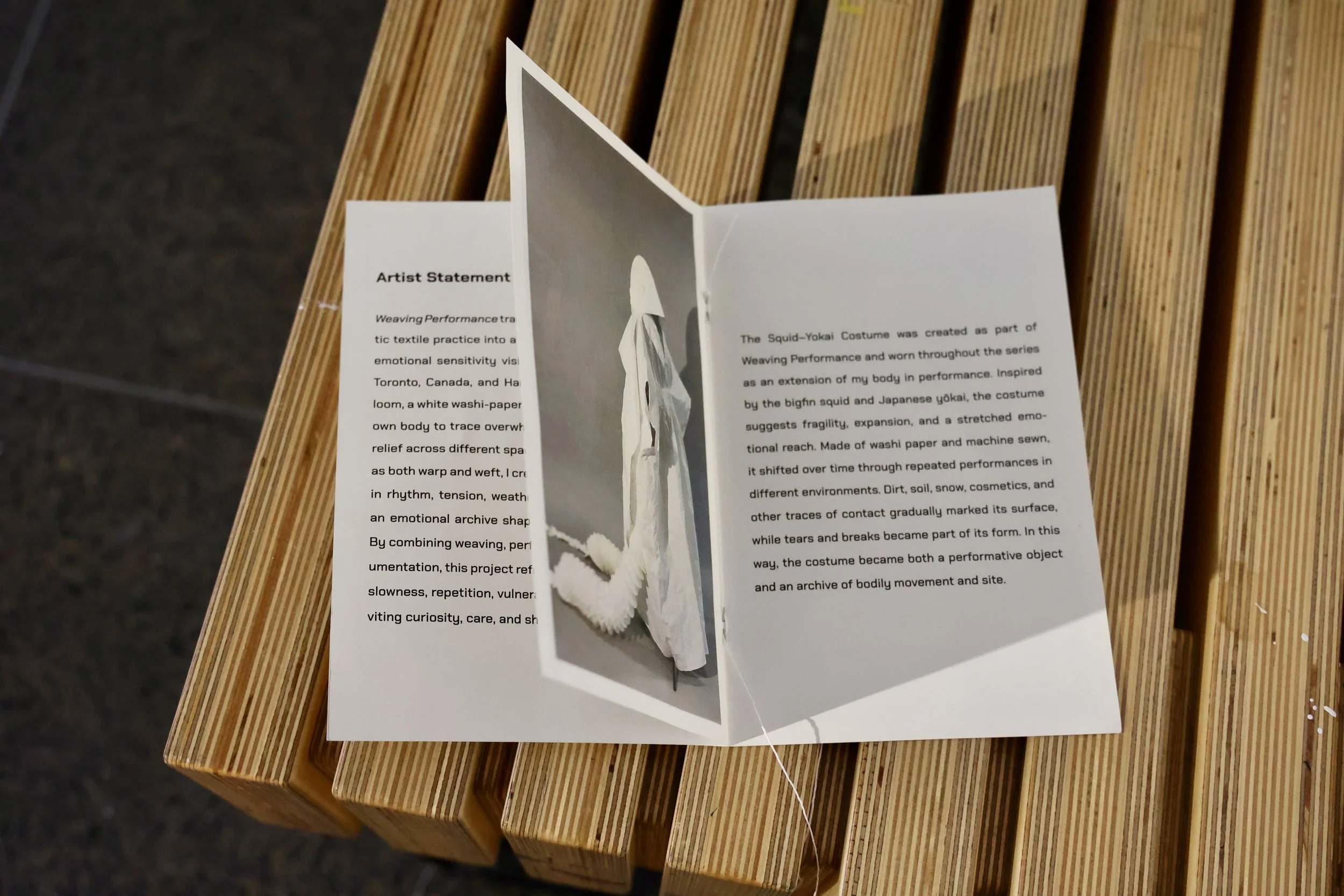
Printed booklet tied to a hallway bench with washi thread, showing the artist statement, costume images, and performance timeline in a handheld format for viewers to read while seated. Photograph by Aritra Das, 2026
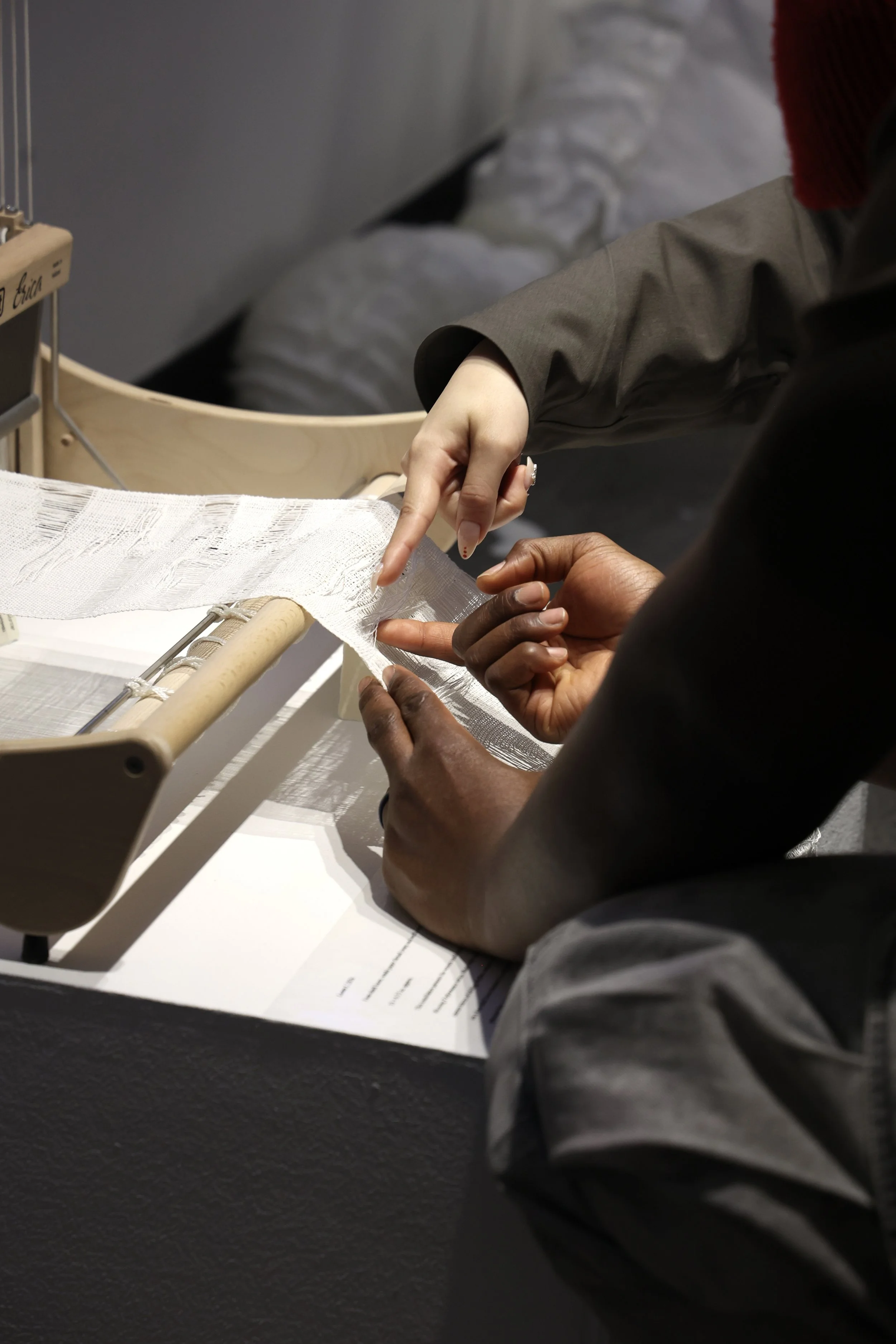
Visitors examined the woven cloth on the loom during the opening reception, as the exhibition space became a site of conversation, looking, and shared attention. Photograph by Aritra Das, 2026.